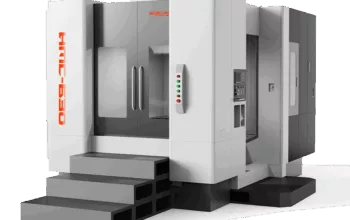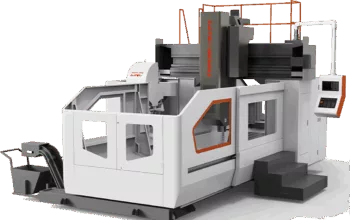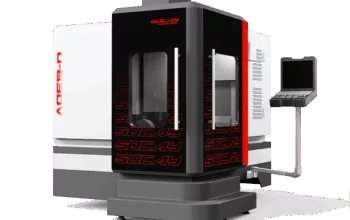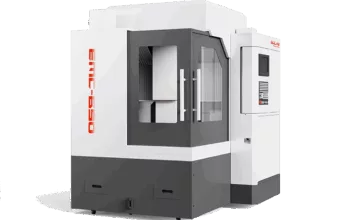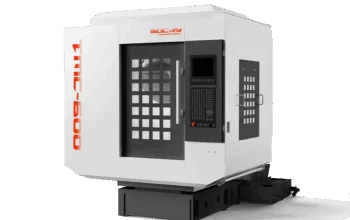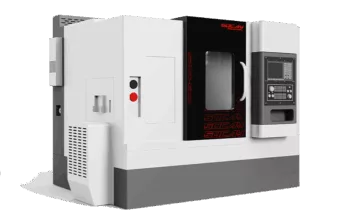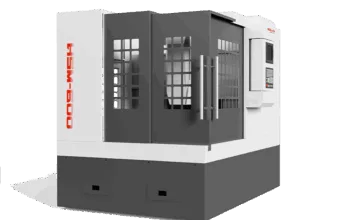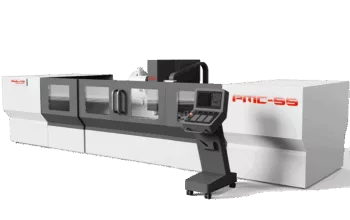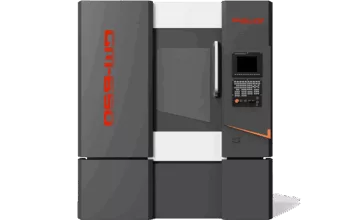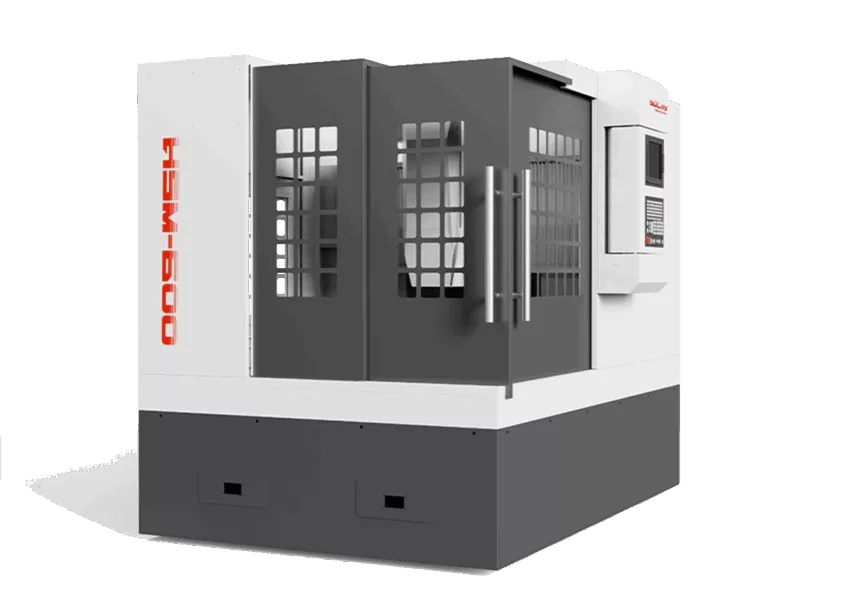
high-speed machining center

More accurately, the high-speed machining center is an enhanced version of the CNC milling machine, It is also called a high-speed milling machine. which is a high-precision CNC machine tool focusing on "high speed, high precision, small tools, and fine surface machining." It can machine finer, faster, more beautifully, and more precisely.

High-Speed Machining Center

Our high-speed machines

High-Speed

Everything serves for speed; our high-speed machining centers have undergone special designs in both structure and configuration. There are two standard models available to choose from.

Contact Us

Machine Parameters

  • high-speed machining centers
Standard configurationUnitHSM600HSM1000
X/Y/Z axis travelmm600/600/3501000/600/550
Worktable sizemm600x6001100x600
Worktable Max loadkg8001500
Distance from spindle nose to worktablemm
T-slot(width-number×spacing)mm5-18x1004-22x125
X/Y/Z axis rapid travel speedM/min30/30/3030/30/30
X/Y/Z axis powerKw
Cutting ratemm/min1000010000
Default spindle typeHSK-A63HSK-A63
Spindle speedmm15000/3000015000/30000
Spindle powerkw2424
Tool magazineT
Positioning accuracymm±0.003/300±0.003/300
RePositioning accuracymm±0.002±0.002
Machine Sizemm2700x2900x31003300x3600x3500
Machine Weightkg700010000
View More
View Less

Features of Socay high-speed machining centers

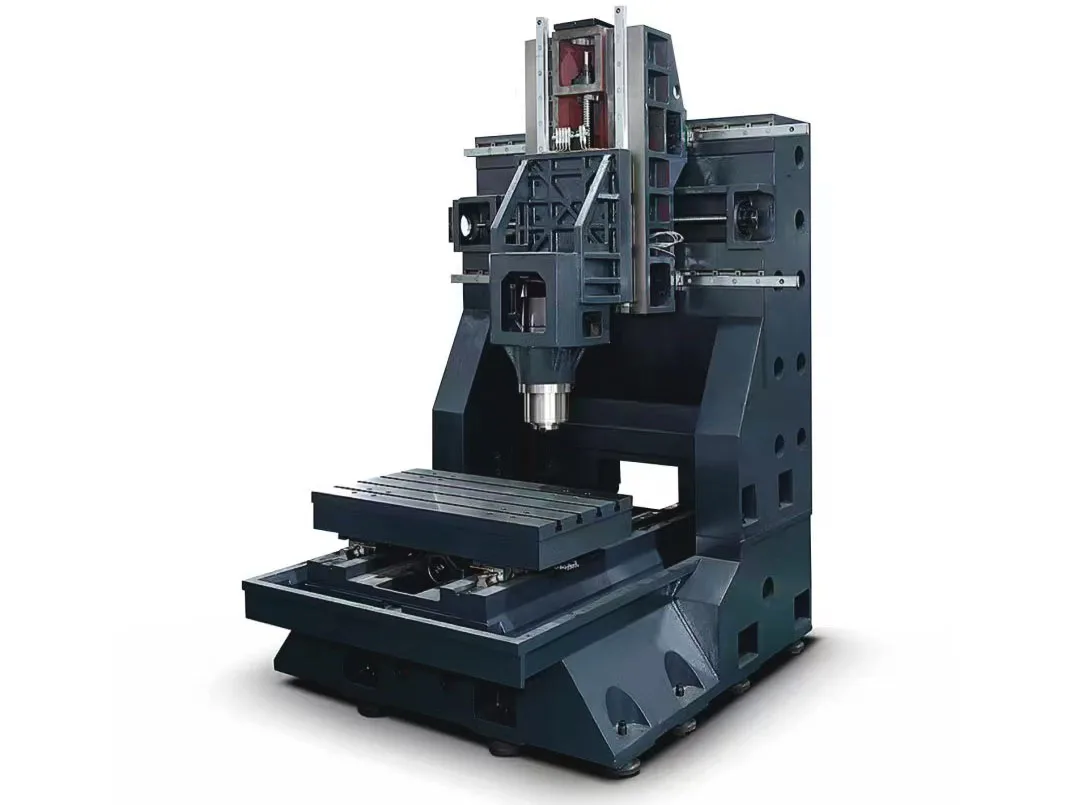
  • Advanced casting structure
  • Natural/thermal aging treatment
  • High-speed electric spindle
  • High dynamic servo
  • High-precision linear scale feedback
  • Thermal compensation system
  • Advanced high-speed control system
  • Micron-level assembly standard
High-speed machining center castings

Advantages of Our High-speed Machine

Ultra-high Surface Finish

The machined workpieces have finer tool marks, brighter surfaces, smaller step-over marks, and smoother curved surfaces.

Micro-tool Machining

Can stably use Φ0.1, Φ0.2, and Φ0.3 mm tools for long-term machining without easily chipping tools, breaking tools, or causing chatter marks.

High-dynamic machining

When machining complex curved surfaces, the machine does not lag, does not overcut, and does not vibrate.

Ultra-high-speed spindle

High-speed machining centers usually adopt 24,000 RPM / 40,000 RPM / 60,000 RPM high-speed electric spindles.

Extremely strong thermal stability

The precision remains stable even after continuous machining for dozens of hours, without producing dimensional drift or curved surface deformation.

Complex curved surface machining

Our machines have a huge advantage when machining 3D curved surfaces, small R angles, and precision contours; the machining process is smooth, continuous, and without hesitation.

Maintaining long-term stability

We attach great importance to: casting aging, assembly precision, thermal stability, and vibration control. It can still maintain high precision after 6–8 years.


Vibration control

Our machines feature a high-rigidity structure, optimized rib design, and a dynamically balanced spindle; therefore, there are fewer chatter marks during high-speed machining.

Precision control system

By default, our machines are equipped with our self-developed system: Socay M26S, and we also provide FANUC 31i, Siemens 840D, and Mitsubishi as options.

FAQs about High-speed machining center


Why choose a High-Speed Milling Machine?

A Heavy-Duty High-Speed Milling Machine provides an ideal balance between speed, rigidity, and precision. It enables manufacturers to perform heavy roughing and high-quality finishing on a single platform, reducing production costs, improving part quality, and increasing overall manufacturing efficiency.

Can our High-Speed Milling Machine machine hardened steel?

Yes. With the appropriate spindle, tooling, cutting parameters, and coolant system, these machines can efficiently machine hardened steels commonly used in mold, die, and precision engineering applications.

What is the difference between a Heavy-Duty High-Speed Milling Machine and a conventional CNC milling machine?

A conventional CNC milling machine is typically optimized for general-purpose machining, whereas a Heavy-Duty High-Speed Milling Machine is engineered for both aggressive material removal and precision finishing. It offers a stronger machine frame, higher spindle power, faster feed rates, greater acceleration, and superior rigidity for continuous industrial production.

What materials can a High-Speed Milling Machine process?

These machines are suitable for machining:
Carbon steel
Alloy steel
Stainless steel
Tool steel
Hardened steel
Cast iron
Aluminum alloys
Copper
Brass
Titanium
Nickel-based alloys
Composite materials
Engineering plastics

What spindle speed is suitable for a Heavy-Duty High-Speed Milling Machine?

Typical spindle speed options include:
8,000 RPM
10,000 RPM
12,000 RPM
15,000 RPM
18,000 RPM
20,000 RPM
The appropriate spindle speed depends on the workpiece material, cutting tool, machining strategy, and required surface finish.

How much spindle power is recommended?

Common spindle motor power ranges include:
11 kW
15 kW
18.5 kW
22 kW
26 kW
30 kW
37 kW
Heavy-duty applications generally require higher spindle torque rather than only higher spindle speed.

What factors should I consider before buying a High-Speed Milling Machine?

Important considerations include:
Workpiece material
Part dimensions
Production volume
Required accuracy
Spindle speed and torque
Table load capacity
Axis travel
CNC controller
Tool magazine capacity
Automation requirements
After-sales service
Spare parts availability
Total cost of ownership

Is a Heavy-Duty High-Speed Milling Machine suitable for mold and die manufacturing?

Absolutely. The combination of high spindle speeds, precision positioning, and rigid construction makes these machines highly effective for machining molds, dies, electrodes, and complex 3D surfaces requiring excellent surface finishes and dimensional accuracy.